

We had the modifier on the wrong code for years
OMT Billing Company
Osteopathic billing for
USA Providers
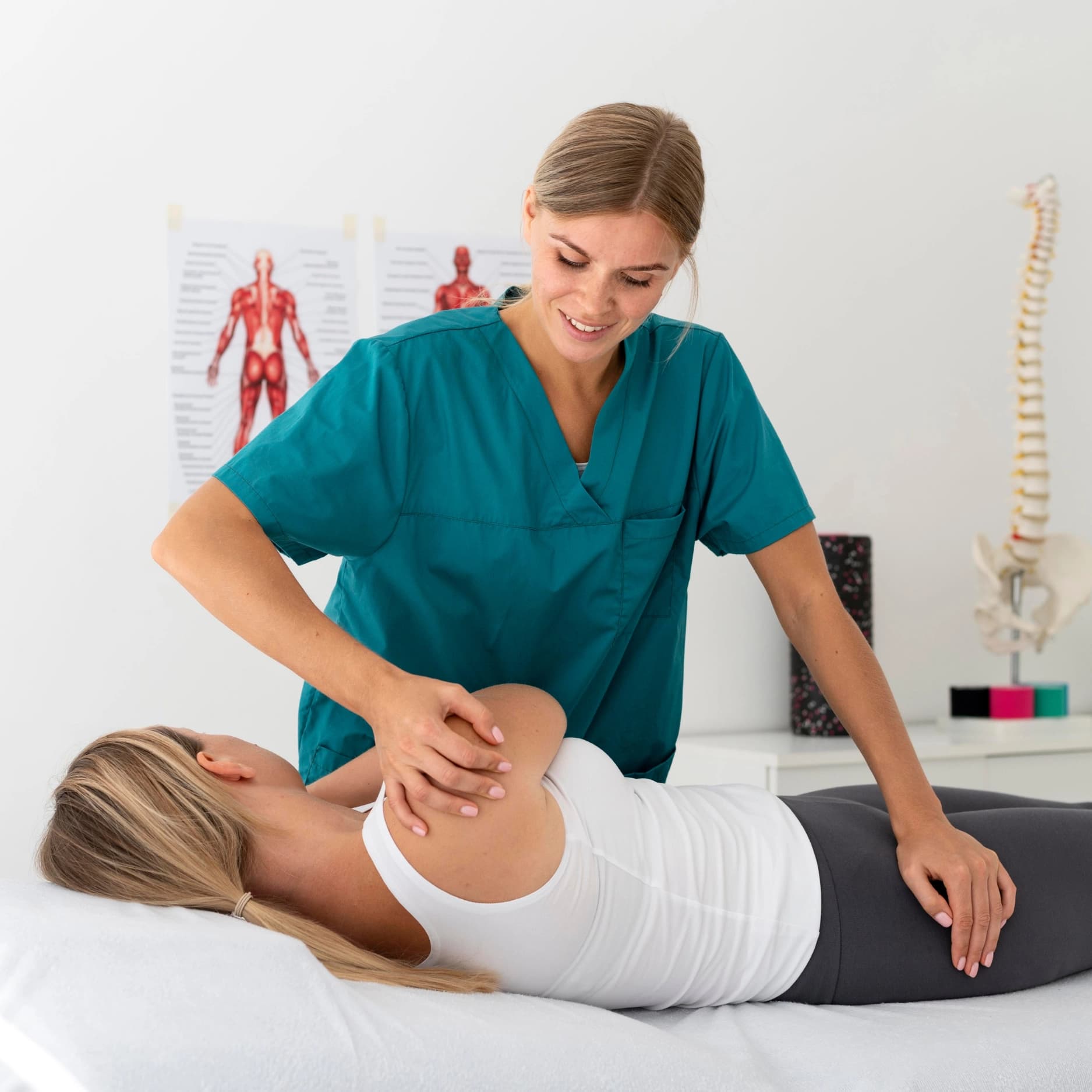
A patient comes in with back pain, gets an exam, and receives OMT the same visit. That is two billable services, but the modifier that makes both payable has to go on a specific code, and most practices get it backwards or leave it off. Our OMT billing services get that modifier right, whether you practice family medicine, sports medicine, pain management, or neuromusculoskeletal medicine.
96%avg. net collection rate across TruCare clients


See your numbers
Or call (760) 589-6611
Results across TruCare clients
96%
>95%
−37%
−38%
Why DOs choose our osteopathic manipulative treatment billing services
Rated 4.8 / 5
Verified client reviews
What we handle, visit and manipulation both
View all servicesWe get your physicians enrolled
Provider enrollmentDO and MD-trained credentialingRevalidation


One visit, two services, and a modifier that goes in a specific place.
Six places OMT revenue goes missing
Modifier 25 placed on the wrong code
The modifier confirms the visit was separately identifiable from the OMT, and it belongs on the E/M code. Placed on the OMT code instead, it does not do what the payer needs it to do.
A separate diagnosis was assumed to be required
Practices sometimes avoid billing a visit and OMT together because they believe two different problems are needed. That belief is incorrect and costs real revenue when the visit genuinely stood on its own.
An E/M was billed for every routine follow-up
Billing a visit charge on a planned follow-up OMT visit where nothing has changed does not match the coverage rule and draws unnecessary scrutiny.
The body region code did not match the documentation
Billing a higher region count than what was actually documented creates a mismatch that undermines the whole claim if it is reviewed.
Somatic dysfunction was not documented per region
Each region treated needs its own documentation of dysfunction, technique, and response. A general note covering the visit as a whole does not meet that standard.
The chiropractic-specific modifier was applied by mistake
OMT never uses the AT modifier that governs chiropractic manipulation claims. Applying it here does not match what the code actually requires.
Rated on the platforms that matter


Our service offerings
Every setting where OMT actually happens
Family and general osteopathic practice
Sports medicine
Pain management
Neuromusculoskeletal medicine and OMM specialists
Obstetric and pediatric OMT
Geriatric OMT
Same-day visit and OMT coordination
Follow-up and maintenance OMT
What actually makes this work
Billers who place the modifier correctly, every time
No unnecessary diagnosis splitting
No disruption to how your practice already runs
What actually causes OMT claims to fail
Curious what your denials are actually costing you?
Request a billing auditThe recurring six:

Modifier 25 missing or misplaced
Modifier 59 used instead of modifier 25
Body region count exceeding documentation
Unjustified E/M on a routine follow-up
Incomplete somatic dysfunction documentation
Chiropractic-specific modifiers applied to OMT
The codes your OMT revenue runs on
Walk through your coding with usThe ones that matter most:
98925–98929
Osteopathic manipulative treatment, by body region
Selected strictly by the number of body regions treated, one to two through nine to ten, and not based on time spent.
We connect to the EHR you already use
Check for your system
Deep integrations with all EHRs
TruCare connects seamlessly with your existing workflows — no switching required.






















What has stayed consistent, and why it still trips practices up
The code structure remains stable
The 98925 to 98929 family, defined by body region count, has not changed structurally, and remains distinct from time-based coding entirely.
The no-separate-diagnosis clarification remains in effect
The CPT guidance confirming a separate diagnosis is not required for same-day E/M and OMT billing continues to apply, and continues to be misunderstood by practices that have not reviewed the rule directly.
The follow-up visit limitation remains active coverage guidance
Payers continue to apply the standard that a routine follow-up OMT visit does not, on its own, justify a separate E/M charge.
Modifier discipline remains the most common point of failure
Placing modifier 25 on the wrong code, or substituting modifier 59 for it, continues to be the error specifically called out by osteopathic billing guidance as avoidable and common.
State-level Medicaid variation continues to exist
Some state Medicaid programs apply their own specific diagnosis code requirements to certain OMT codes, a detail that has to be checked state by state rather than assumed to be uniform nationally.
Someone has to track a rule most practices never fully learned
A modifier placement rule and a diagnosis-pairing clarification that most practices still get wrong are not complicated. They are just easy to overlook without someone checking for them specifically.
In-house vs. outsourced
What one biller cannot track across visit and manipulation billing
| The question | One in-house biller | TruCare |
|---|---|---|
| Modifier 25 placement | Sometimes applied to the wrong code | Always on the E/M code |
| Separate diagnosis assumption | Diagnoses split unnecessarily | Billed together when genuinely warranted |
| Follow-up visit billing | An E/M billed every visit | Billed only when the coverage rule is met |
| Body region documentation | Not always checked against the code | Matched to the note every time |
| Chiropractic modifier confusion | AT sometimes applied incorrectly | Never applied to OMT claims |
| Cost shape | Salary, benefits, training, software | A percentage of collections, so it scales with volume |
| Staff absence | Billing slows across the practice | Coverage is handled without disruption |
| Regulatory change | Discovered through a denial | Tracked and built into process ahead of time |
| Visibility | A report assembled on request | Live, by visit type and by region count |
| Multi-setting consistency | Varies by provider | Applied the same way across every setting |
Hover a state to see coverage
Where we serve
OMT billing services in every state
Modifier 25 placement
Same-day E/M and OMT billing
Follow-up visit rules
Multi-setting consistency
Multi-state enrollment
A named account contact
Who we bill every day
Medicare Part B
Medicare Advantage
Medicaid and managed Medicaid
BCBS and Anthem
Centene family
Other
We bill whatever plans your practice is contracted with. If you are not contracted yet, TruCred handles the enrollment.
OMT billing saver guide
A practice collecting $680,000 saves up to $56,128 a year by outsourcing to TruCare
| In-house billing | With TruCare | Annual saving | |
|---|---|---|---|
| Dedicated billing staff | $73,060 | $0 | $73,060 |
| Billing software and clearinghouse | Varies | Included | — |
| Training, turnover, and coverage | Varies | Included | — |
| TruCare fee (from 2.49% of collections) | — | $16,932 | — |
| Total annual cost | $73,060 | $16,932 | $56,128 |
Example: a practice collecting $680,000 a year with one full-time biller, at TruCare’s starting rate of 2.49%. Biller cost uses the BLS May 2025 median wage for medical records specialists ($51,140), with benefits at 30% of total compensation. Software and training costs vary by practice and are not counted. We do not replace your front desk, we take the claims work off it. Larger practices are quoted on volume rather than at the starting rate, so a bigger practice should not scale this example up.
Want this run on your own numbers?
Talk to an OMT billing expertWhat a practice gains once the modifier is actually in the right place
“We had been splitting our notes into two separate problems for years to justify billing the visit and the treatment together, because someone had once told us that was the rule. It was never the rule. Once we stopped doing that unnecessary extra work and just documented what actually happened, nothing about our collections got worse, and our charting got a lot simpler.”
Dr. Harriet Oyelaran, DO
Family medicine and OMT practice