

We were billing PRP like a standard injection
Sports Medicine Billing Company
Sports Medicine Billing
Services in USA
Sports medicine runs two billing systems because it runs two kinds of care. A steroid injection is a standard, covered treatment. A PRP injection, often given in the same visit, is treated by most payers as investigational and billed straight to the patient instead. Viscosupplementation sits in its own category entirely. Our sports medicine billing services keep all three straight, along with the concussion documentation that carries real liability beyond the claim itself.
96%avg. net collection rate across TruCare clients



Book a demo
Or call (760) 589-6611
Results across TruCare clients
96%
>95%
−37%
−38%
Why practices choose our sports medicine medical billing services
Rated 4.8 / 5
Verified client reviews
What we handle, covered care and cash-pay both
View all servicesWe get your physicians enrolled
Provider enrollmentPECOS upkeepRevalidation


The same visit can produce a covered claim and a cash transaction, side by side.
Six places sports medicine revenue goes missing
PRP or orthobiologic claims were submitted to insurance anyway
These are generally non-covered for musculoskeletal use, and repeatedly billing them wastes staff time on claims that were never going to pay, while delaying the direct-pay collection that should have happened instead.
Different injection types were billed as one category
Steroid injections, viscosupplementation, and orthobiologics each follow their own coverage rule, and treating them the same loses revenue on the covered services and creates confusion on the uncovered ones.
Concussion documentation did not support the return-to-play decision
A billing note alone does not protect a practice from the liability a clearance decision actually carries, and thin documentation exposes both the claim and the practice.
Musculoskeletal ultrasound guidance was not billed separately
Using ultrasound to guide an injection is its own billable service, distinct from a diagnostic ultrasound study, and folding it into the injection code leaves revenue uncollected.
Performance testing was billed like a medical service
Conditioning and performance evaluation often sit outside standard medical benefits, and billing it as if it were covered care produces predictable denials.
Team coverage arrangements were not clearly separated from clinic billing
Without a clear line between what a team contract already covers and what is separately billable, a practice can either double-bill or leave genuinely separate services unclaimed.
Rated on the platforms that matter



Our service offerings
Every part of a sports medicine practice
Sports injury evaluation and management
Injections, by type
Musculoskeletal ultrasound
Concussion management
Pre-participation physicals
Team physician and event coverage, briefly
Performance and conditioning services
Surgical sports medicine, briefly
What actually makes this work
Billers who separate coverage by injection type, not by habit
Documentation built for liability, not just reimbursement
No disruption to how your practice already runs
What actually causes sports medicine claims to fail
Curious what your denials are actually costing you?
Request a billing auditThe recurring six:
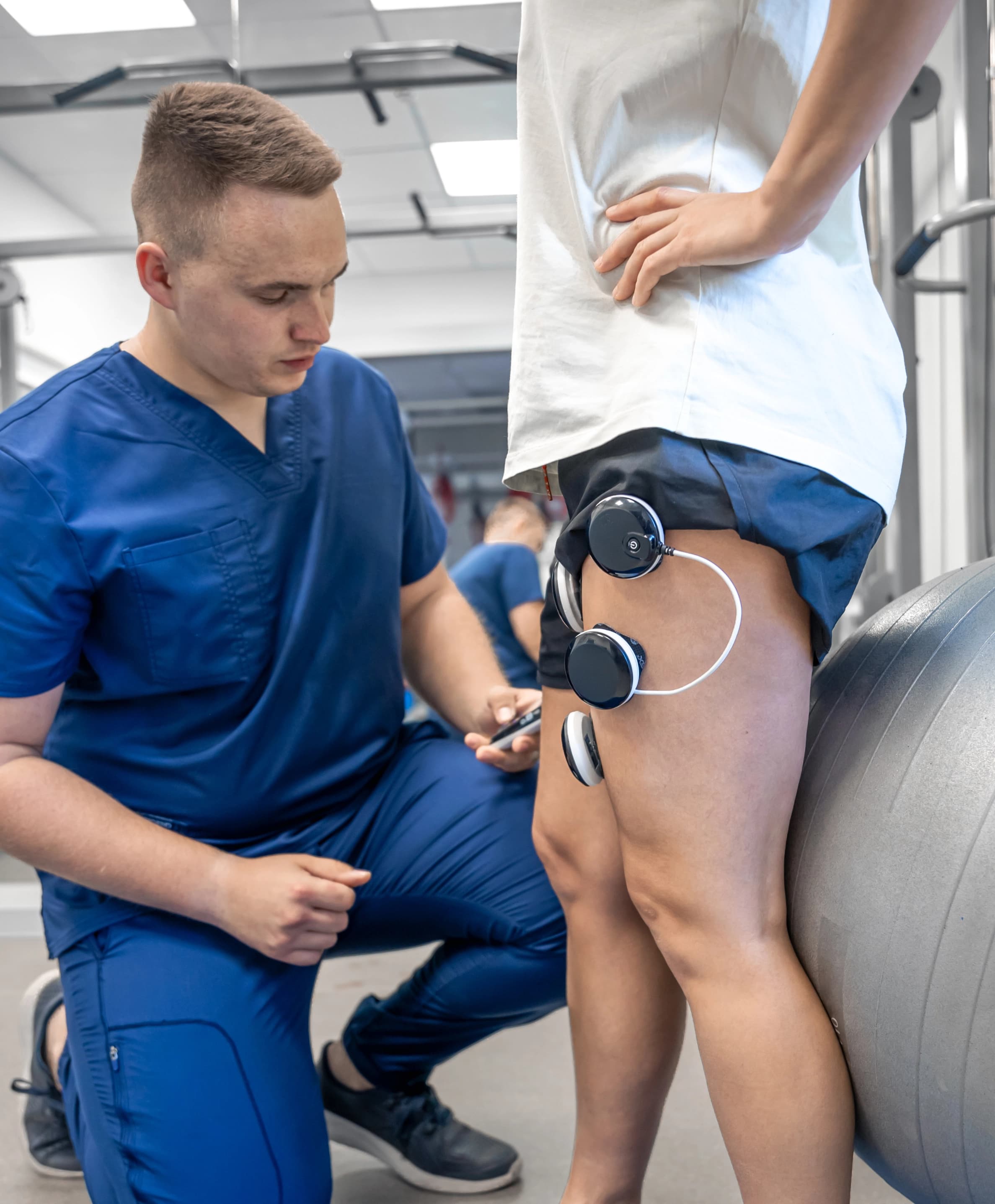
PRP or orthobiologic billed to insurance
Injection type miscategorized
Ultrasound guidance not separated from the injection
Concussion visit undercoded relative to its complexity
Performance testing billed as a medical service
Team coverage service billed without clarity on contract terms
The codes your sports medicine revenue runs on
Walk through your coding with usThe ones that matter most:
2060020610
Joint injections
Small joint and large joint injection, billed as standard covered services under most payer policies.
We connect to the EHR you already use
Check for your system
Deep integrations with all EHRs
TruCare connects seamlessly with your existing workflows — no switching required.






















What has stayed consistent, and why it keeps causing confusion
PRP and orthobiologic non-coverage remains the standard, with real exceptions to know
Most payers continue to classify PRP for musculoskeletal conditions as investigational, while PRP remains covered under a distinct national coverage determination for chronic non-healing wounds, a different clinical context entirely from sports medicine use.
Provisional coverage experiments have not held
Tricare offered limited coverage for PRP in specific conditions for several years before that coverage ended in September 2024, illustrating how unstable even partial coverage attempts have been in this category.
Injection-type fragmentation remains the central billing challenge
Steroid injections, viscosupplementation, and orthobiologics continue to be governed by separate coverage rules, and treating them as one category remains one of the most commonly cited sources of lost revenue in this specialty.
Concussion liability continues to shape documentation expectations
Return-to-play decision-making remains a defining, high-stakes part of sports medicine training and practice, and the documentation standard around it continues to carry weight beyond billing alone.
Someone has to track which service falls on which side of the line
A specialty where three different injections in one visit can follow three different coverage rules needs someone checking that distinction constantly, not applying one assumption across all of them.
In-house vs. outsourced
What one biller cannot track across covered care and cash-pay at once
| The question | One in-house biller | TruCare |
|---|---|---|
| Injection type categorization | Billed as one category | Routed by actual coverage rule |
| PRP and orthobiologics | Submitted to insurance repeatedly | Built into a clean, direct cash-pay process |
| Concussion documentation | Focused on the code alone | Built to support the clinical decision too |
| Ultrasound guidance billing | Folded into the injection | Billed separately, every time |
| Performance testing | Sometimes billed to insurance | Billed as the non-covered service it is |
| Team coverage arrangements | Unclear separation from clinic billing | Kept distinct from contract-covered services |
| Cost shape | Salary, benefits, training, software | A percentage of collections, so it scales with volume |
| Staff absence | Billing slows across the practice | Coverage is handled without disruption |
| Regulatory change | Discovered through a denial | Tracked and built into process ahead of time |
| Visibility | A report assembled on request | Live, by covered and cash-pay revenue separately |
Hover a state to see coverage
Where we serve
Sports medicine billing in every state
Injection-type coverage routing
PRP and orthobiologic cash-pay billing
Concussion documentation
MSK ultrasound billing
Multi-state enrollment
A named account contact
Who we bill every day
Medicare Part B
Medicare Advantage
Medicaid and managed Medicaid
BCBS and Anthem
Centene family
Direct-pay patients
We bill whatever plans your practice is contracted with. If you are not contracted yet, TruCred handles the enrollment.
Sports medicine billing saver guide
A practice collecting $930,000 saves up to $49,903 a year by outsourcing to TruCare
| In-house billing | With TruCare | Annual saving | |
|---|---|---|---|
| Dedicated billing staff | $73,060 | $0 | $73,060 |
| Billing software and clearinghouse | Varies | Included | — |
| Training, turnover, and coverage | Varies | Included | — |
| TruCare fee (from 2.49% of collections) | — | $23,157 | — |
| Total annual cost | $73,060 | $23,157 | $49,903 |
Example: a practice collecting $930,000 a year with one full-time biller, at TruCare’s starting rate of 2.49%. Biller cost uses the BLS May 2025 median wage for medical records specialists ($51,140), with benefits at 30% of total compensation. Software and training costs vary by practice and are not counted. We do not replace your front desk, we take the claims and cash-pay billing work off it. Larger practices are quoted on volume rather than at the starting rate, so a bigger practice should not scale this example up.
Want this run on your own numbers?
Talk to a sports medicine billing expertWhat a practice gains once covered and cash-pay care are actually separated
“We spent years submitting PRP claims to insurance out of habit, getting denied every time, and never building the direct-pay process that would have actually collected for that work. Once we separated it out properly, we were not just collecting more, we were spending far less staff time fighting a battle that was never winnable in the first place.”
Dr. Walter Sussman
Sports medicine physician, non-surgical orthopedic and sports medicine practice